
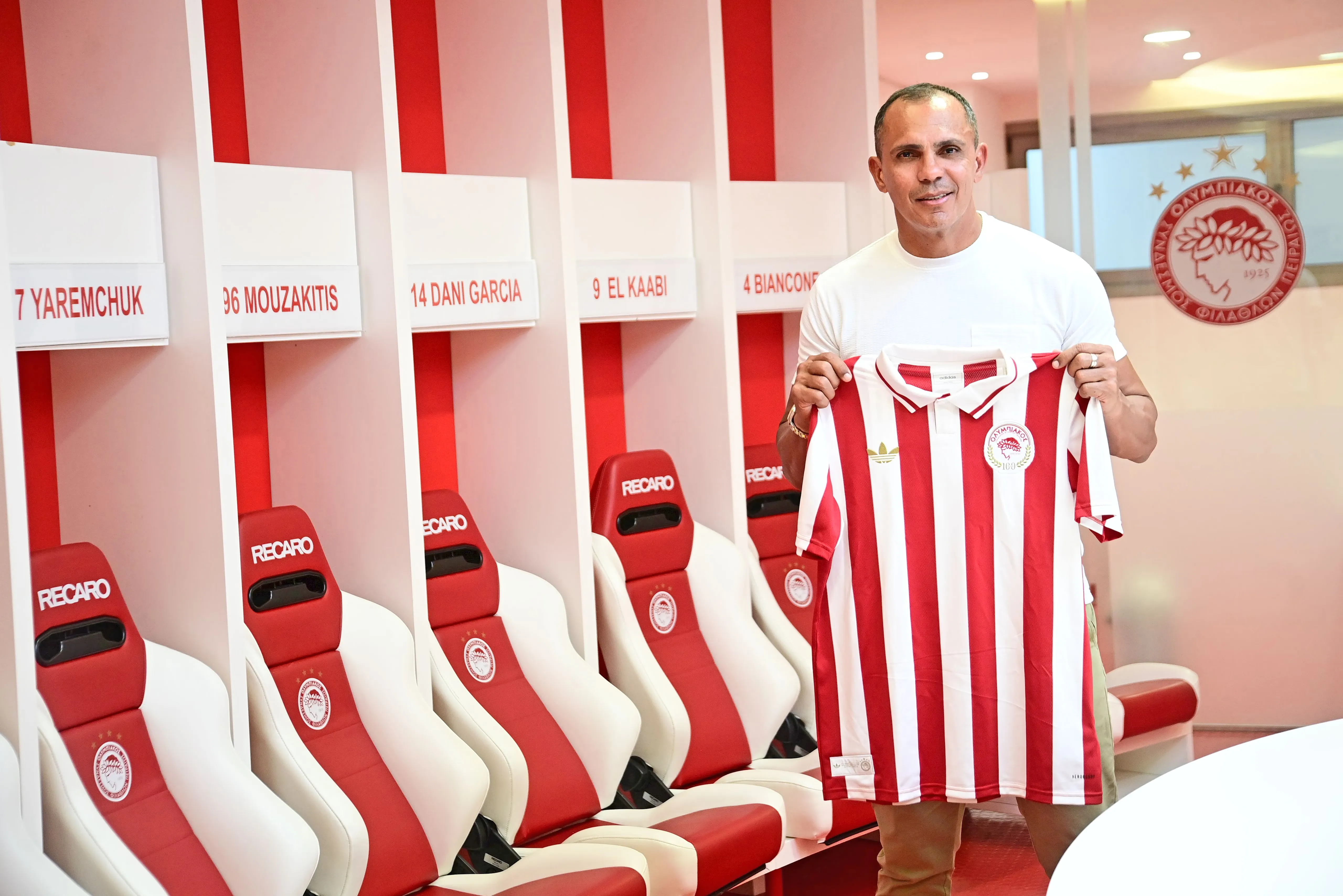
Der brasilianische „Magier“ blickt heute auf seine transformativen Jahre in Piräus zurück. In diesem exklusiven Gespräch reflektiert er über seine spirituelle Ankunft beim Verein und die tiefe Verbindung, die er zu den Fans aufbaute. Zudem analysiert er die sich grundlegend verändernde Rolle des klassischen Spielmachers im modernen Fußball. Giovanni teilt persönliche Anekdoten über seine Zeit in Griechenland und erklärt, wie seine taktische Intelligenz den Erfolg von Olympiacos maßgeblich prägte. Es ist eine Reise durch die Geschichte eines Idols, das den Club nachhaltig beeinflusst hat.
How did Giovanni end up at Olympiacos?
Giovanni attributes his move to the Greek club to a spiritual sign that changed the course of his career. Following his departure from Barcelona under Louis van Gaal, the Brazilian playmaker was initially hesitant about moving to Greece. He recalls being on vacation and feeling uncertain about the transfer offer from Olympiacos, despite the club's persistent calls.
According to the player, a moment of prayer led to what he describes as a divine sign, prompting him to accept the challenge. He notes that he has shared this story in many interviews, emphasizing that the transition was not just a professional move, but a destiny shaped by faith. Ultimately, the decision proved to be transformative, resulting in a period of unprecedented success that exceeded all his initial expectations, creating what he calls a "wonderful story."
What defines his legendary era in Piraeus?
The statistics from his time in Greece underscore a period of absolute dominance. Between 1999 and 2005, Giovanni became the creative heartbeat of a team that redefined Greek football. His impact is measured not only by the 97 goals and 35 assists he recorded across 208 matches but also by the trophy cabinet he helped fill with five championships and one Greek Cup.
Reflecting on his time at the Georgios Karaiskakis Stadium, Giovanni describes the experience as a cinematic journey. Every time he enters the arena, memories of victories and intense atmospheres play back like a film in front of him. He emphasizes that while talent is an innate gift, it was his rigorous daily training and the tactical freedom granted to him by Olympiacos that allowed him to reach his full potential. He believes that among all the teams he played for, Olympiacos was the one that gave him the greatest liberty to develop his talent.
The tactical freedom of the classic playmaker
Giovanni notes that the role of the playmaker has undergone a significant metamorphosis. During his peak, he enjoyed a level of creative liberty that allowed him to dictate the tempo of matches. He observes that modern football has shifted toward much stricter tactical discipline, requiring players to adapt their natural instincts to fit complex systemic structures.
For the next generation of creative midfielders, or those wishing to play as a "number 10," he suggests that adaptability is the key to survival in the contemporary game. He believes that while the football of the past will not return, every player has the capacity to adapt to the tactical emphasis of the modern era. He views the number 10 as a position of great global symbolism and remains happy to have held that mantle during his career.
Which matches and rivals stand out in his memory?
European competition provided the highest level of scrutiny and challenge for the Brazilian star. When asked about the opponents that tested him most, Giovanni immediately identified Real Madrid as the most difficult force he encountered during his years in Greece.
However, his emotional connection to specific matches is tied to iconic goals that have become part of club folklore. He highlights his performance against Galatasaray as a standout moment, noting that fans frequently ask him about that specific goal. He also recalls significant encounters against PAOK and Real Madrid as defining moments of his career. These matches represent the pinnacle of the high-stakes atmosphere he thrived in during the early 2000s, leaving a lasting impression on both the player and the supporters.
Who were the key figures in his professional circle?
The camaraderie within the dressing room was a cornerstone of the team's success. Giovanni recalls that the bond between teammates—the mutual support during difficult moments—was more impactful than any specific tactical advice received from coaches. He emphasizes that in the dressing room, players helped one another, creating a collective strength.
He identifies several key figures who shaped his experience at the club:
- On-field connection: He shared a profound understanding with Rivaldo, having played alongside him at Barcelona, the Brazilian national team, and Olympiacos.
- Off-field friendship: Neri Castillo is cited as one of his closest friends within the club environment.
- Personality dynamics: He remembers Zé Elias as the funniest member of the squad, while Cristian Karambo was noted for being the most demanding and rigorous professional.
What is his view on the current state of Olympiacos?
Despite living in Brazil, Giovanni remains a keen observer of the club's progress, even if time zone differences make watching live matches difficult. He notes that while he does not watch every game due to scheduling, he always follows the results and wishes the team well. He expresses great pride in the club's recent European successes, specifically mentioning the importance of the Conference League title in elevating Olympiacos to the upper echelons of European football, noting that it brought the club to a level it had not reached before.
He also looks toward the future through the lens of the club's youth development. He praised the success of the U20 team at the Maracanã, noting how the world was surprised and delighted by their performance. He emphasized the value of winning titles at the youth level, stating that such experiences provide the necessary psychological foundation and motivation for young players when they eventually transition to the first team and face high-pressure finals.
Key takeaways
- Giovanni played 208 matches for Olympiacos between 1999 and 2005, scoring 97 goals and providing 35 assists.
- The Brazilian star secured five league titles and one Greek Cup during his tenure.
- He identifies Real Madrid as the most challenging opponent he faced in Europe.
- Giovanni views his move to Greece as a spiritual decision prompted by a divine sign.
- He emphasizes that modern midfielders must adapt to increased tactical rigidity.
Frequently asked questions
Why does Giovanni consider Greece his second home?
Giovanni feels a deep emotional bond with the Greek people and the culture. He describes the fans' enduring love for him as something that makes him incredibly happy. For him, the connection goes beyond football, as he views the Greek population as part of his extended family. He also enjoys the culture, the food, and the lifestyle, specifically mentioning his love for Greek salad, lamb, and grilled octopus.
How does he view his role as a 'number 10'?
He sees the number 10 as a position of great global symbolism. While he enjoyed the creative freedom the role afforded him at Olympiacos, he acknowledges that the modern game requires much more tactical discipline and physical adaptation than in the past.
What is his advice for aspiring professional footballers?
His primary advice is for athletes to never give up and to always fight. He believes that while talent is a starting point, continuous hard work and daily evolution through training are what truly cultivate a professional's ability.
How does he remember his time at the Georgios Karaiskakis Stadium?
He describes the stadium as a place of intense joy and shared victories. Every visit to the pitch triggers a flood of memories, which he likens to watching a movie of his most successful and happy professional moments.
Does he still follow Olympiacos' performance?
Yes, although he cannot always watch live matches due to the time difference with Brazil, he consistently follows the results. He remains a supporter of the club and wishes them continued success in both domestic and European competitions.
Conclusion
Giovanni's reflection serves as a bridge between the golden era of the early 2000s and the modern ambitions of Olympiacos. His journey from a hesitant arrival to becoming a permanent icon of the club highlights the profound impact a single player can have on a footballing culture. By blending his spiritual narrative with professional insights, Giovanni reinforces his status not just as a former athlete, but as a lifelong ambassador whose legacy continues to inspire both the veterans of the club and the rising generation of Greek football.