
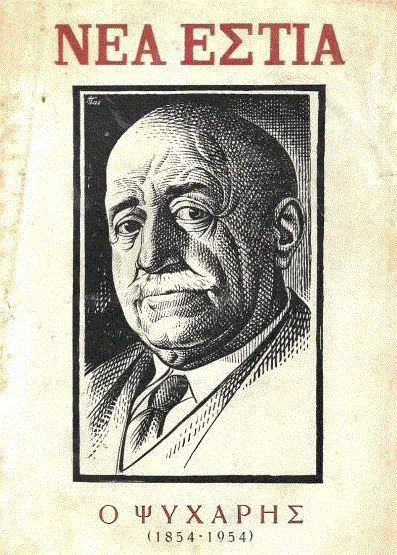
Von seinem revolutionären Werk 'To Taxidi mou' bis hin zur sprachlichen Grundsteinlegung des modernen Griechenlands: Erfahren Sie hier, wie Giannis Psycharis die Seele der gesamten Nation durch die Sprache grundlegend transformierte. Er kämpfte unermüdlich für die Anerkennung der Demotiki als die wahre, authentische Ausdrucksform des Volkes. Sein Einfluss prägte nicht nur die Literatur, sondern definierte die kulturelle Identität eines ganzen Landes neu. Dieser Artikel beleuchtet seinen lebenslangen Kampf und die tiefgreifenden Auswirkungen seiner linguistischen Theorien auf die griechische Gesellschaft und deren Entwicklung.
Who was Giannis Psycharis and why does his legacy matter?
Giannis Psycharis was the primary catalyst for the most significant linguistic transformation in modern Greek history. As a linguist and writer, he challenged the dominance of Katharevousa—a formal, archaizing version of Greek—and advocated for the adoption of Demotiki, the living language spoken by the Greek populace. Born in Odessa on May 15, 1854 (or May 3 according to the old calendar), Psycharis eventually settled in Paris, where he became a prominent figure in Greek intellectual life.
Psycharis believed that for Greece to achieve true cultural and spiritual progress, it had to embrace the language that resonated with the soul of its people. He argued that the nation needed to shake off the 'cold and artificial' nature of Katharevousa. His influence was not merely academic; it was a movement that sought to bridge the gap between the elite intelligentsia and the common citizen. By proposing that Demotiki should serve not only literature but also science, administration, and law, he aimed to create a functional, unified national identity. Although his practical application of these theories sometimes faced criticism for being extreme or arbitrary, his role in the intellectual history of modern Greece remains indisputable, placing him alongside figures like Korais, Solomos, and Palamas.
What was the impact of 'To Taxidi mou' on Greek culture?
'To Taxidi mou' (My Journey) acted as the spark that ignited the linguistic debate in Greece. Published 80 years before the retrospective analysis by Fani Kleanthis in 1968, the book disrupted the stagnant intellectual waters of the time. Psycharis did not claim to have invented a new language; rather, he sought to codify the existing common tongue of the people. He argued that the language of the people was not 'vulgar' but was, in fact, the authentic proof of Greece's continuity from its ancient roots.
In his own words, as cited in historical archives, Psycharis explained his methodology: he would observe the natural grammar and phonology of the people, and if a necessary concept lacked a specific word, he would borrow from Ancient Greek and adapt it to the modern spoken syntax. He noted that he did not spend years 'making' words, but rather studied the history of the language through public lessons to ensure he was capturing the true essence of the people's speech. He aimed to write the language with order and unity, carefully guarding its phonology, typical forms, and syntax. This approach was intended to create a structured, rule-based version of Demotiki that could compete with the formal rigor of Katharevousa while maintaining its organic vitality.
The Methodology of Linguistic Integration
Psycharis's approach was a calculated attempt to harmonize tradition with modernity. He emphasized several key pillars in his linguistic strategy to ensure Demotiki was seen as a legitimate tool for a modern state:
- Phonological Integrity: Maintaining the natural sounds and phonetic laws of the spoken language to ensure it remained grounded in reality.
- Syntactic Unity: Applying the grammatical rules naturally used by the population rather than imposing artificial structures.
- Lexical Expansion: Utilizing ancient roots to fill modern semantic gaps. As Psycharis noted, this is how all nations progress; by taking ancient words and 'fitting' them into the grammar of the people, he sought to expand the language's capacity without losing its demotic character.
This method was intended to prove that Demotiki was a sophisticated vehicle for complex thought, capable of handling the demands of science and law, rather than just being a tool for simple folk expression.
How did the Demoticism movement gain support among the elite?
The 'sermon' of Psycharis found a receptive audience among the 'enlightened' thinkers and poets of his era. While the movement faced intense opposition from traditionalists, it gained momentum as influential figures began to adopt Demotiki in their own works. This support turned a linguistic theory into a cultural phenomenon that reshaped the Greek literary landscape.
Key figures who embraced the Demotic cause included:
- Literary Figures: Poets and writers such as Kostis Palamas, Emmanuel Rhoides, Alexandros Pallis, and Ioannis Vlachogiannis. These figures helped transition the language from a spoken dialect into a medium for high art.
- Political Leaders: Statesmen like Eleftherios Venizelos and Georgios Kafantaris provided political weight to the movement. Notably, Ioannis Metaxas is cited as the only ruler who used Demotiki exclusively in his speeches, providing a unique moment of political legitimacy for the language.
This widespread adoption by the intellectual and political elite provided the necessary legitimacy for Demotiki to move from the fringes of poetry into the mainstream of national life. It transformed the language into a tool of statecraft and a symbol of national vitality.
What is the long-term effect of Psycharis's work on modern Greece?
The 'seeds' planted by Psycharis have been harvested by subsequent generations, resulting in a modern Greek identity that is linguistically integrated. Today, the linguistic landscape bears little resemblance to the rigid, bifurcated environment of the early 20th century. The tension between the 'high' and 'low' languages has largely been resolved in favor of the living tongue.
The evolution of the language has seen several key developments:
- Media Integration: Demotiki moved from purely literary columns in newspapers to becoming the standard for all journalistic reporting.
- Scientific Advancement: Prominent scholars, such as Professor Louros, successfully published scientific treatises in Demotiki, proving its capacity for technical precision and academic rigor.
- The Decline of Katharevousa: The formal language did not disappear overnight but gradually 'diluted.' Modern users of Katharevousa now tend to simplify their syntax and mix in demotic elements, meaning that contemporary formal texts no longer resemble the rigid structures of 60 or 80 years ago.
Consequently, the struggle he initiated eventually led to a reality where the artificiality of Katharevousa could no longer be sustained, allowing the language of the people to become the language of the state.
FAQ: Giannis Psycharis and the Language Reform
What was the main goal of the Demoticism movement?
The primary goal was to establish Demotiki, the spoken language of the Greek people, as the official language of education, law, science, and administration. This aimed to replace the artificial Katharevousa and create a more authentic, functional, and unified national culture.
Did Psycharis invent the Demotic language?
No, Psycharis did not claim to be a creator of language. He stated that he wrote in the common language of the people. His role was to observe, study, and codify its history, phonology, and syntax to provide it with the structure necessary for formal use.
How did Psycharis defend Demotiki against accusations of being vulgar?
Psycharis argued that Demotiki was not vulgar but was a testament to national vitality. He maintained that the language proved the genuine continuity of the Greek people from antiquity, rather than disconnecting them from their ancient heritage.
Which political figures supported the use of Demotiki?
Several influential politicians supported the movement, including Eleftherios Venizelos and Georgios Kafantaris. Notably, Ioannis Metaxas is recognized for using Demotiki exclusively in his official speeches, marking a significant moment for the language's political legitimacy.
How does modern Greek compare to the language of Psycharis's time?
Modern Greek is much more streamlined. While Katharevousa has largely faded, its remnants exist in simplified forms. The language used today is a direct result of the Demoticist movement, characterized by the integration of scientific and administrative terminology into the spoken tongue.
Key takeaways
- Giannis Psycharis was the central figure of the Demoticism movement in Greece.
- His book 'To Taxidi mou' served as a foundational manifesto for linguistic reform.
- Demotiki was championed as the authentic language of both the people and the nation.
- The movement successfully transitioned Demotiki into science, law, and education.
- The linguistic divide between Katharevousa and Demotiki has largely been resolved.
Conclusion
The legacy of Giannis Psycharis is woven into the very fabric of modern Greek communication. By championing the language of the people, he did more than just advocate for a set of grammatical rules; he fought for the cultural soul of a nation. While his methods were sometimes viewed as radical, the result—a functional, living language that serves all aspects of modern life—validates his historical importance. As modern Greece continues to evolve, the linguistic foundation established by Psycharis remains the essential bridge between the ancient past and the contemporary reality.